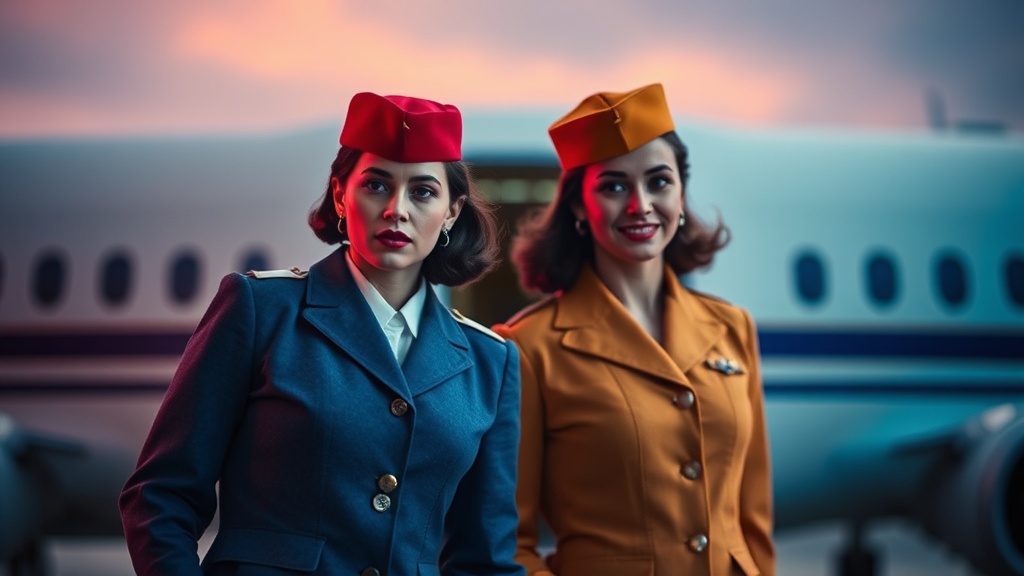
Why Do Fashion Collectors Chase Vintage Airline Uniforms?

What's the appeal of owning a piece of clothing designed for a job you'd never actually do? Vintage airline uniforms have become one of the most intriguing corners of fashion collectibles—garments that weren't made for the runway yet carry the prestige of golden-age travel and the craftsmanship of a bygone era. This isn't about wearing a costume; it's about preserving a moment in design history when airlines competed as much on style as on service. Whether you're drawn to the tailored silhouettes of the 1960s or the bold patterns of the 1970s, these pieces tell stories that no contemporary fast-fashion item could match.
What Makes Airline Uniforms Different From Regular Workwear?
There's something almost rebellious about collecting uniforms—taking a garment meant to erase individuality and turning it into a personal statement. Unlike standard corporate attire, airline uniforms were designed by some of the most celebrated fashion houses in history. Emilio Pucci created psychedelic looks for Braniff International. Halston designed understated elegance for Braniff in the 1970s. Christian Dior, Pierre Balmain, and Jean Louis all lent their names to flight attendant wardrobes. These weren't afterthoughts—they were marketing tools, status symbols, and sometimes genuine works of art.
The construction quality reflects this pedigree. Hand-finished seams, natural fibers, custom buttons bearing airline logos, and interior labels that name the designer—these details separate genuine vintage pieces from reproductions or generic staff clothing. A 1960s United Airlines summer dress in sky blue gabardine isn't just a dress. It's a document of mid-century American optimism, of an industry that believed appearance mattered, and of a designer (in this case, Jean Louis) who treated every commission as seriously as a couture collection.
Which Airlines Produced the Most Collectible Uniforms?
Not all airline uniforms are created equal—some airlines understood the power of fashion marketing earlier and more completely than others. Braniff International stands at the pinnacle for many collectors. Their "End of the Plain Plane" campaign of 1965 revolutionized airline branding, and the uniforms designed by Pucci—with their geometric prints, bold colors, and space-age accessories—remain among the most sought-after pieces in aviation fashion collecting. Finding a complete Braniff ensemble (dress, coat, hat, and matching accessories) in excellent condition can command prices that rival vintage couture.
Pan Am holds a special place in collector consciousness, though perhaps more for cultural resonance than pure design innovation. The navy blue suits with white caps became iconic through their association with the golden age of jet travel—and later, through films and television that mythologized the era. The reality is more nuanced: early Pan Am uniforms were conservative and practical, while later iterations from the 1970s and 80s showed more flair. A 1970s Pan Am wrap dress in polyester crepe might not have the cachet of Pucci, but it carries the weight of history—and it's often more wearable for modern collectors.
British Airways and its predecessor BOAC produced consistently interesting pieces, particularly the 1970s uniforms by Hardy Amies. These tailored suits in navy and red reflect a very British approach to corporate identity—understated elegance with subtle branding. For collectors interested in construction and fabric quality, BOAC/BA pieces often exceed their American counterparts in finishing details. Similarly, Qantas commissioned designs from Emilio Pucci and later Yves Saint Laurent, creating pieces that blend Australian practicality with European sophistication.
How Do You Authenticate and Value Vintage Airline Uniforms?
The market for vintage airline fashion has attracted reproductions and misattributions, so authentication matters. Start with the labels—genuine pieces will have airline-specific tags, often with dates or uniform numbers. Many airlines used interior labels that named the designer or manufacturer, and these can be researched against known production periods. The fabrics also tell stories: 1960s pieces often use wool gabardine or silk, while the 1970s saw more polyester and synthetic blends. The hardware matters too—authentic buttons frequently bear airline logos or were custom-made for specific uniform programs.
Condition dramatically affects value, but perfect preservation isn't always necessary—or even desirable. A uniform that shows gentle wear tells a more honest story than one that appears untouched since the factory. That said, damage to key design elements (missing buttons, torn seams, significant staining) does reduce both value and wearability. Collectors should examine pieces carefully for alterations—many flight attendants had their uniforms tailored for fit, and while this was common practice, heavily modified pieces are less valuable to purists.
Provenance can add significant interest. A uniform with documentation—an employee ID, photographs of it being worn, or paperwork from the airline—carries more weight than an anonymous piece. Auction records and dealer catalogs from the past decade suggest that complete ensembles with accessories (hats, scarves, pins) typically command two to three times the price of single garments. Rarity matters too: uniforms from defunct airlines (Braniff, Eastern, TWA) often outsell those from surviving carriers, and limited-edition designer collaborations (the Pucci years, specifically) sit at the top of the market.
Can You Actually Wear Vintage Airline Uniforms Today?
This is where collecting meets personal expression—and where opinions divide. Some collectors treat these pieces as museum artifacts, storing them carefully and viewing them as investments or historical documents. Others integrate them into daily wardrobes, wearing a 1970s polyester shift dress to the office or styling a vintage airline scarf with contemporary pieces. Both approaches are valid, though they require different collecting strategies.
If you plan to wear your collection, focus on condition and fit. Vintage sizing runs small, and airline uniforms were often tailored to individual employees, so alterations are common. Look for pieces that can be integrated into modern outfits—a Braniff scarf adds color to a neutral blazer; a simple navy BOAC dress works with contemporary accessories. Be realistic about care requirements: many vintage pieces are dry-clean only, and some fabrics have become fragile with age. The synthetic blends popular in the 1970s are particularly prone to perspiration damage and color transfer.
For collectors who prefer preservation, proper storage is critical. Hangers should be padded to prevent shoulder dimples; garments need breathable covers rather than plastic; and climate control matters more than you might think. Avoid attics and basements—stable room temperature with moderate humidity will extend the life of natural fibers. Document your pieces with photographs and notes about provenance. And consider the possibility of lending to exhibitions: many aviation museums actively seek loan pieces for displays about the history of flight, and a well-documented uniform can contribute to public understanding of this fascinating design history.
Where Do Collectors Find These Pieces?
The hunt is half the pleasure. Estate sales in cities with major airline hubs (Miami, New York, Los Angeles, London) occasionally yield treasures from retired flight attendants or airline employees. Online marketplaces require patience and knowledge—search terms matter, and sellers don't always understand what they have. Specialized dealers in vintage workwear or aviation memorabilia sometimes acquire uniform pieces, though prices tend to reflect their expertise. Airline memorabilia shows and collector conventions (yes, they exist) offer opportunities to handle pieces before buying and to learn from experienced collectors who can spot details that photographs hide.
The community aspect shouldn't be underestimated. Collectors of vintage airline fashion often form networks, sharing information about upcoming sales, authentication questions, and the stories behind particular pieces. These connections can lead to private sales and trades that never appear on the open market. Following auction houses that handle costume and textile sales—particularly those with aviation or transportation collections—can alert you to exceptional pieces. And don't overlook the airlines themselves: some carriers have sold surplus uniforms or commissioned reproductions for brand heritage projects, offering collectors access to pieces that might otherwise remain in corporate archives.
What Should New Collectors Know Before Starting?
Start with what draws you in—don't collect for investment potential alone, because markets shift and the joy of collecting comes from genuine appreciation. Learn the history of the airlines that interest you, understand the designers involved, and handle as many pieces as possible to develop your eye for quality and authenticity. Set boundaries for your collection (by era, by airline, by designer) to prevent the hobby from becoming overwhelming.
Document everything from your first acquisition. Photograph pieces when they arrive, note the seller and price, and record any provenance information. This documentation becomes valuable if you ever sell or donate pieces, and it enriches your personal connection to the collection. Finally, connect with other collectors through online forums, social media groups, or—when possible—in-person events. The knowledge in this community runs deep, and most experienced collectors remember being beginners and are willing to share what they've learned.