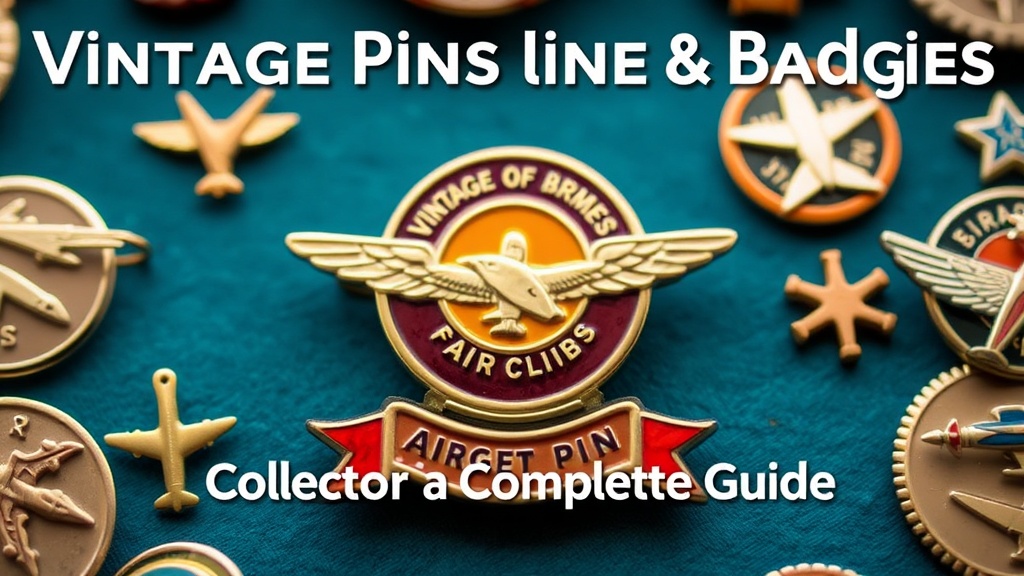
Vintage Airline Pins & Badges: A Collector's Complete Guide

What Makes Vintage Airline Pins Valuable to Collectors?
Rarity, condition, and historical significance determine what vintage airline pins fetch on today's market—with some Pan Am wing badges from the 1960s commanding over $500 at auction. The market for aviation memorabilia has shifted dramatically in the past decade. What once gathered dust in flea market bins now sits behind glass at specialized shows, coveted by enthusiasts who understand these small metal pieces carry stories of an era when air travel meant something different entirely.
Airline pins emerged as both functional identifiers and marketing tools. Pilots, flight attendants, and ground crew wore wing badges and company crests as symbols of professional pride. Airlines distributed promotional pins to passengers—children especially—as souvenirs of their journeys. These weren't mass-produced trinkets, either. Many were crafted by established jewelers like L.G. Balfour and C.A. Tower, companies that also produced military insignia and college rings.
The value equation breaks down into several components. Production numbers matter tremendously. TWA's 1950s "Star of Service" pins—given to frequent flyers—exist in relatively small quantities compared to the millions of plastic wings handed out in the 1980s. Condition separates the serious pieces from the casual finds. A mint-condition Delta widget pin in its original packaging can sell for triple what a scratched, loose example brings. Provenance adds another layer. Pins from defunct carriers—Eastern Air Lines, Braniff International, TWA—carry premium prices simply because the stories they represent have ended.
Material composition affects desirability too. Early aviation badges were typically sterling silver or 10-karat gold-filled. The shift to base metals and enamel happened gradually through the 1970s. Serious collectors gravitate toward the precious metal examples, though well-designed enamel pieces from airlines like PSA (Pacific Southwest Airlines) have developed their own following. The iconic "smile" logo—bright orange and infectious—represents California aviation history that collectors actively preserve.
How Do You Identify Authentic Vintage Airline Badges?
Authentic vintage airline pins bear manufacturer marks, proper construction techniques, and materials consistent with their claimed era—with reproductions often betraying themselves through modern plating, incorrect fonts, or anachronistic construction methods. The authentication process requires careful examination and—here's the thing—a willingness to walk away when something feels wrong.
Start with the back. Genuine vintage pieces almost always show a manufacturer's hallmark: BALFOUR, TIFFANY & CO., H&H (Hampton & Hilton), or BLACKINTON are common marks. These companies maintained quality standards that cheap reproductions rarely match. The pin mechanism itself tells a story—safety clasps didn't become standard until the late 1960s, so a "1950s" piece with a modern butterfly clutch deserves suspicion. Early examples used simple C-clasps or trombone-style closures.
Weight provides another clue. Sterling silver and gold-filled badges have heft. A "vintage" Pan Am wing that feels like aluminum probably isn't vintage—or isn't what it claims to be. Magnet tests help too; precious metals aren't magnetic, while many modern reproductions use ferrous base metals. That said, some legitimate vintage pieces were made from aluminum (particularly wartime examples), so context matters.
| Feature | Authentic Vintage (pre-1980) | Modern Reproduction |
|---|---|---|
| Back Markings | Manufacturer hallmarks, patent numbers | Generic or missing marks |
| Pin Clasp | C-clasp, trombone, early safety catch | Butterfly clutch, modern mechanisms |
| Metal Content | Sterling, gold-filled, solid brass | Plated zinc, aluminum, pot metal |
| Enamel Work | Cloisonné or champlevé, slightly irregular | Printed or epoxy dome, perfect edges |
| Wear Patterns | Even aging, natural patina | Artificial distressing, inconsistent wear |
Font accuracy trips up many fakes. Airlines updated their logos periodically, and reproductions often mix eras—a supposed 1960s piece might bear a 1980s typeface. Reference materials help here. AirlineHistory.com maintains extensive logo archives, and specialized collector forums can verify period-correct details. When in doubt, consult the community. Seasoned collectors—especially those who worked in the industry—can spot inconsistencies that aren't obvious to newcomers.
Where Can You Find Rare Airline Pins for Your Collection?
Serious collectors source vintage airline pins through aviation memorabilia shows, estate sales, specialized eBay sellers, and dedicated Facebook groups—with patience and relationships mattering far more than deep pockets alone. The hunt itself becomes part of the appeal. Finding that elusive Braniff "Flying Colors" enamel pin at a reasonable price delivers satisfaction that buying from a dealer's catalog simply cannot replicate.
Aviation memorabilia shows represent the high end of the market. Events like the Airliners International Convention and regional airline history conferences bring together collectors, former airline employees, and family members liquidating estates. These venues offer something online marketplaces cannot: the ability to examine pieces in person, ask questions, and build relationships with sellers who'll remember what you're hunting. The catch? Competition is fierce, and prices reflect the curated environment.
Estate sales in airline hub cities—Atlanta (Delta), Dallas (American, Southwest), Chicago (United, the former Midway)—occasionally yield remarkable finds. Retired flight attendants and pilots accumulated decades of pins, often stored in jewelry boxes or dresser drawers. Their families frequently don't recognize the value, pricing airline pins at costume jewelry levels. This requires legwork—scanning estate sale listings, driving to neighborhoods, arriving early. Worth noting: the best pieces rarely make it to the second day.
Online marketplaces demand discernment. eBay hosts thousands of airline pins, but the ratio of reproductions to authentic vintage pieces runs disturbingly high. Established sellers with extensive feedback and return policies offer safer transactions than auctions with grainy photos and vague descriptions. Etsy has emerged as a surprising source for curated selections, though prices trend higher. The Facebook group "Airline Memorabilia Collectors" maintains a active marketplace with vetted members—an imperfect but useful resource.
Airline employee associations and retiree groups occasionally organize sales or swaps. The World Wings International organization—comprised of former Pan Am flight attendants—has been known to make historical pieces available to serious collectors who demonstrate genuine respect for the material. These transactions require networking and patience, not just PayPal accounts.
How Should You Store and Display Aviation Pins?
Proper storage of vintage airline pins requires acid-free materials, controlled humidity, and protection from direct sunlight—with display options ranging from shadow boxes to specialized pin boards that prevent damage while showcasing the collection. These aren't refrigerator magnets. The metals, enamels, and platings that make airline pins attractive also make them vulnerable to environmental damage.
For storage, avoid plastic bags that trap moisture and PVC pages that off-gas chemicals. Archival-quality polyethylene or Mylar sleeves work better, stored flat in binders designed for collectibles. Keep collections in climate-controlled spaces—not attics, not basements, not the garage. Humidity above 60% encourages tarnish on silver pieces and can loosen enamel settings over time. Silica gel packets help, but they require regular replacement or recharging.
Display presents competing priorities: visibility versus protection. Shadow boxes with UV-filtering glass offer excellent protection and create striking wall presentations. Arrange pins by airline, era, or theme—some collectors group by manufacturer, highlighting how different jewelers interpreted similar wing designs. Cork boards covered with felt provide affordable display options, though they expose pins to dust and handling damage. The pins are meant to be seen, not hermetically sealed. Balance preservation with enjoyment.
Cleaning requires restraint. Silver pieces benefit from occasional gentle polishing—Wright's Silver Cream or similar non-abrasive products. Never use dips or harsh chemicals on plated pieces; you'll strip the finish. Enamel shouldn't need cleaning beyond light dusting with a soft brush. If a pin arrives with corrosion or damage, consult a professional conservator rather than attempting aggressive restoration. The patina of age, properly earned, often adds character that over-cleaning destroys.
The community aspect matters here too. Joining collector groups—whether the Airline History Museum's membership or regional aviation historical societies—provides access to knowledge, trading opportunities, and the simple pleasure of sharing enthusiasm with others who understand why a small metal Pan Am globe or a TWA double-globe wing badge matters. These objects represent human ambition, technological achievement, and a particular moment in commercial aviation that will not return.
Collecting vintage airline pins connects you to a tangible history. Each piece passed through human hands—pilots who flew through storms, attendants who served coffee at 30,000 feet, children on their first flights pressing these souvenirs into pockets. The value isn't merely monetary. It's the preservation of stories, of identities, of an industry that once operated with different assumptions about service, style, and what it meant to travel between cities and continents. Start small. Learn constantly. And remember—the best collections are built slowly, deliberately, with attention to both the objects and the histories they carry.