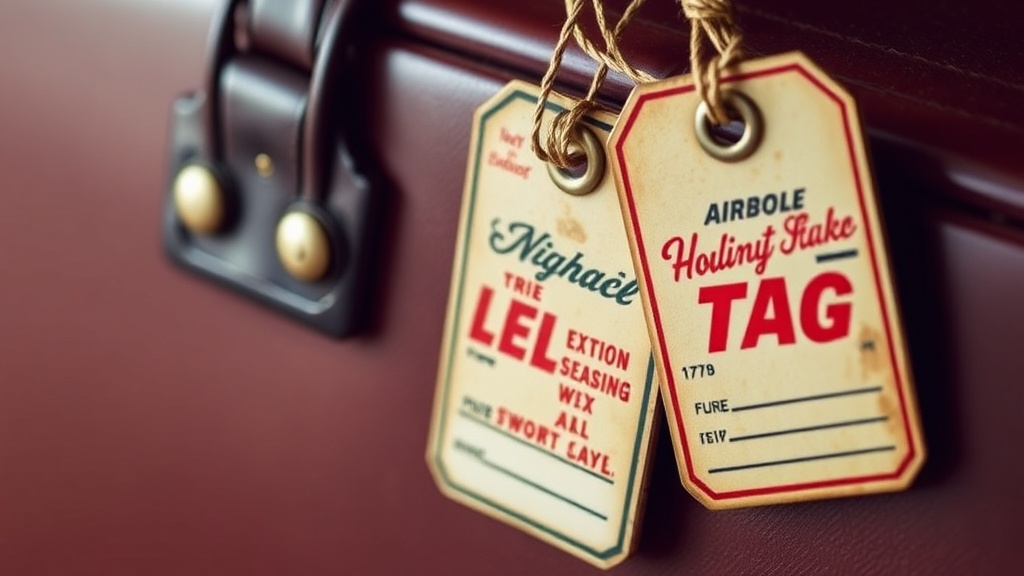
Vintage Airline Luggage Tags: 7 Clues That Reveal Hidden Value

What Makes These Small Items Worth Collecting?
You're browsing a Portland estate sale when dusty sunbeams illuminate something unexpected—a thick leather tag bearing Pan Am's unmistakable blue globe, tucked inside a box of yellowed travel papers. Your fingers brush cracked leather. This isn't just baggage ephemera; it's a physical fragment of aviation history that survived decades when most similar items were discarded.
Vintage airline luggage tags occupy a peculiar corner of fashion and aviation collectibles. They're compact enough to store hundreds in a shoebox, yet distinctive enough to anchor serious collections. Unlike bulky uniforms or fragile silk scarves, these tags actually traveled—strapped to suitcases, tossed into cargo holds, exposed to rain and heat and rough baggage handling. They weren't designed to last. That's precisely why their survival matters.
Each tag carries layered narratives. There's the airline's story—their branding decisions, their route expansions, their financial health (struggling carriers often produced cheaper tags in later years). There's the individual traveler's story—destinations chosen, belongings carried, trips that changed lives. And there's the broader cultural shift—from aviation as luxury for the wealthy to mass transportation for everyone. A single tag anchors all three stories simultaneously.
The visual variety justifies collecting even without historical attachment. Early leather tags from the 1930s and 1940s feature embossed lettering, brass grommets, sometimes hand-tooled details. The 1950s and 1960s brought bold printed designs—TWA's minimalist red squares, Braniff's psychedelic oranges, the sleek modernism of late-century carriers. Plastic tags emerged in the 1970s, often featuring those distinctive casino logos from the brief era when airlines owned Las Vegas hotels. Every decade had its aesthetic language—and its preferred materials.
How Can You Spot Rare Tags From Common Ones?
Authentication separates valuable finds from worthless reproductions. For leather tags, examine hardware closely. Genuine vintage pieces used brass or steel grommets that develop specific oxidation patterns—greenish verdigris on brass, reddish rust on steel—that penetrate the metal rather than sitting on the surface. The leather itself shows stress patterns following natural grain lines, not the random artificial distressing seen on fakes.
Printed paper tags require different scrutiny. Typography provides immediate dating clues—fonts that weren't available until the 1980s appearing on supposedly "vintage 1950s" tags are instant red flags. Paper stock matters too; mid-century tags used heavier bond papers than the flimsier versions produced during the 1970s oil crisis. Some premium carriers like BOAC and Air France even watermarked their tags.
Route information offers historical verification. Tags displaying service to cities that didn't have airport facilities until specific years help establish timelines. Defunct airlines (Braniff, Eastern, TWA, Pan Am) carry built-in collectibility since their supply is finite. However, watch carefully for "fantasy" tags—modern creations using authentic logos but manufactured recently. These aren't necessarily fraudulent if sold as reproductions, but they lack the historical value collectors seek.
Where Are the Best Places to Find Them?
The hunt often matters as much as ownership. Online marketplaces offer convenience but charge premium prices for it. Serious collectors develop relationships with estate sale liquidators, antique mall dealers, and aviation specialists who recognize value in items others dismiss as garbage.
Aviation museums occasionally deaccession duplicate items. The Smithsonian National Air and Space Museum maintains extensive airline ephemera collections, though they focus more on aircraft than passenger experience items. The Airline History Museum in Kansas City offers resources and occasionally makes collectibles available to serious collectors.
Collector conventions provide hunting grounds where you can examine pieces in person—critical for authentication. Events like those affiliated with Airliners.net draw dealers with substantial inventories. Don't overlook unconventional sources either: closing hotels liquidate decades-old lost-and-found items; airport storage auctions yield unexpected treasures; family attics represent the holy grail of discovery.
Which Airlines Produced the Most Valuable Tags?
Certain carriers consistently command premium prices. Pan Am leads most wishlists—their globe logo represents aviation romanticism, and their 1991 collapse created automatic scarcity. Early leather Pan Am tags from the 1930s through 1950s fetch hundreds of dollars in excellent condition. Even their 1980s plastic tags attract collectors nostalgic for the airline's final decade.
TWA (Trans World Airlines) offers strong competition, particularly their mid-century designs featuring Howard Hughes-era branding. The simple red and white color scheme—bold, instantly recognizable—translates beautifully to small format luggage tags. TWA's association with Hollywood glamour and extensive international network added cultural cache that persists today.
Braniff International represents the wild card. Their 1960s rebranding by Alexander Girard—psychedelic colors, geometric patterns, wildly unconventional uniforms—produced some of aviation history's most visually striking tags. Braniff collectors specialize heavily; they're gathering mid-century design artifacts, not just airline memorabilia. Complete sets of Braniff color-era tags (orange, turquoise, ocher, light blue) command respect in any collection.
What Condition Issues Should You Watch For?
Condition grading follows similar principles to other paper and leather collectibles. Mint condition means unused, no handwriting, original attachments intact. These are rare—most surviving tags were actually used, creating an interesting philosophical debate. Is a tag more valuable untouched, or bearing evidence of actual travel?
Most collectors prefer "excellent used" condition—light wear consistent with purpose, legible text, intact structure, clearly traveled. Heavily damaged tags (torn, water-stained, barely legible) hold minimal value unless they're extremely rare varieties. That said, some damage tells authentic stories—a tag showing saltwater staining from a 1960s transatlantic crossing might intrigue collectors interested in aviation's operational realities.
How Do You Store and Display Tags Properly?
Storage decisions impact long-term preservation. Leather tags need breathable environments—plastic bags trap moisture and encourage mold growth. Acid-free archival sleeves work well for paper tags. For display, UV protection matters significantly; sunlight fades colors rapidly. Temperature stability prevents leather cracking and paper embrittlement.
Many collectors create shadow boxes grouping tags by era, airline, or geographic region. Some frame particularly beautiful examples as standalone art pieces. The compact size allows for creative presentation—imagine a world map with tags placed at their corresponding destinations, or a timeline showing the evolution of a single airline's branding across decades.
What's the Best Way to Authenticate a Questionable Tag?
When doubt persists, provenance research helps. Can the seller provide context about where the tag originated? Tags from known collections carry more confidence than anonymous eBay listings. Reference books on airline collectibles—though increasingly hard to find—provide visual comparisons for typography, materials, and construction methods.
Collector communities offer invaluable resources. Online forums and social media groups include members who've handled thousands of tags and can spot inconsistencies instantly. Building relationships with these experts matters more than any single purchase. They'll teach you to recognize the specific feel of 1950s leather, the particular sound of vintage grommets, the subtle color variations that distinguish authentic tags from reproductions.
Starting a collection requires no massive investment. Pick an angle—tags from airlines serving your hometown, tags from a specific decade, tags featuring interesting typography. Build slowly, learn constantly, enjoy the tangible connection to aviation history. Every tag arrived somewhere; it carried belongings through the sky at a specific moment. That's worth preserving.