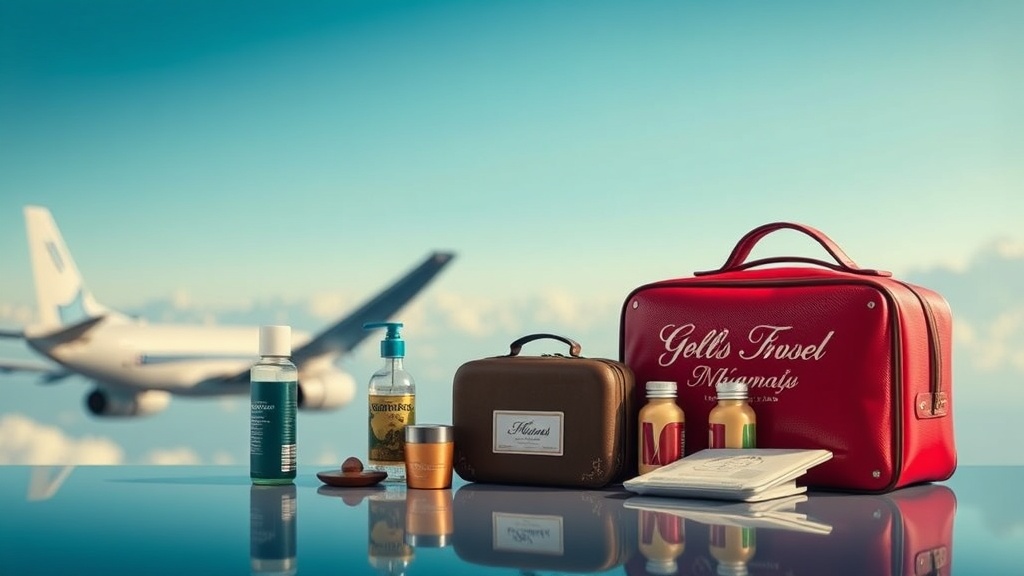
Vintage Airline Amenity Kits: A Collector's Buying Guide

This guide covers everything needed to start or refine a collection of vintage airline amenity kits — from identifying valuable Pan Am zip cases and Emirates Bvlgari leather pouches to pricing, authentication, and proper storage. Whether you're hunting for a 1970s TWA hard-shell case or a limited-edition Singapore Airlines Ferragamo kit, knowing what separates a $10 souvenir from a $400 collectible will save money and disappointment.
What makes vintage airline amenity kits collectible?
Vintage airline amenity kits become collectible when they combine airline heritage, designer collaboration, limited production runs, and premium materials.
Pan Am kits from the 1960s and 1970s rank among the most sought-after items. The airline's globe logo and distinctive blue zip cases evoke the jet-set era in a way few other objects can. (Collectors often pay a premium for kits that still contain original contents — miniature soaps, combs, and sewing kits.) That said, condition matters enormously. A scuffed vinyl case with faded silk-screening might fetch $15, while a mint Pan Am leather amenity kit from the late 1980s can command over $200.
Designer partnerships drive serious value. Emirates collaborated with Bvlgari on first-class hard cases made from genuine leather with brushed-metal clasps. Singapore Airlines handed out Salvatore Ferragamo kits in navy and burgundy grained leather. British Airways teamed up with Liberty London for floral-print fabric pouches that appeal to fashion collectors as much as aviation enthusiasts. Qantas even distributed Porsche Design aluminum cases on select long-haul routes — sleek objects that look more like Rimowa luggage than disposable freebies.
Limited editions create scarcity. Airlines produce commemorative kits for inaugural routes, aircraft retirements, or alliance anniversaries. A Qantas Porsche Design kit from the A380 launch period carries more cachet than a standard business-class pouch from the same year. Here's the thing: the airline industry treats amenity kits as disposable marketing tools, so most passengers threw them away. Surviving examples in excellent condition are genuinely scarce.
How much should you pay for vintage airline amenity kits?
Expect to pay anywhere from $15 for common 1990s vinyl pouches to $500 or more for mint, designer-branded first-class kits with original contents and packaging.
Entry-level collecting doesn't require deep pockets. Mass-produced kits from Delta, United, or American Airlines from the 1980s and 1990s typically sell for $15 to $40. These usually feature synthetic leather or coated nylon, simple zip closures, and standard airline logos. They're a great way to build a thematic collection — say, every major US carrier from the deregulation era — without breaking the bank.
Mid-tier pieces range from $75 to $250. This bracket includes premium leather kits from Virgin Atlantic, Air France, and Japan Airlines, often without a luxury fashion house label but made from noticeably better materials. You'll also find commemorative hard cases and regional specialties here — perhaps an Alitalia kit from the 1990s or a Cathay Pacific canvas roll in excellent condition.
| Category | Examples | Price Range (USD) | What to Look For |
|---|---|---|---|
| Entry-Level | Delta, United, American Airlines (1980s–1990s) | $15 – $40 | Clean logos, intact zips, no staining |
| Mid-Tier | Virgin Atlantic, Air France, Japan Airlines leather kits | $75 – $250 | Genuine leather, original contents, limited editions |
| High-End | Emirates Bvlgari, Singapore Airlines Ferragamo, Qantas Porsche Design | $250 – $500+ | Designer tags, original packaging, route-specific commemoratives |
High-end collecting centers on fashion-house collaborations. An Emirates Bvlgari leather case with original toiletries still sealed inside can sell for $300 to $450. Singapore Airlines Ferragamo kits regularly hit $250 to $350. The catch? Reproductions and "empty" cases sold as originals abound at this level. Always verify that designer logos are embossed or printed by the fashion house — not slapped on with a cheap transfer.
Where can you buy authentic vintage airline amenity kits?
The best sources are reputable eBay sellers with strong feedback, specialist aviation memorabilia dealers, Etsy shops focused on vintage travel goods, and dedicated airline collectibles shows in the United States and Europe.
eBay remains the largest marketplace. Search terms like "Pan Am amenity kit," "Singapore Airlines Ferragamo," or "Qantas Porsche Design" return hundreds of results. Worth noting: the platform's authentication guarantee doesn't cover most airline memorabilia, so due diligence falls on the buyer. Stick to sellers with 99% positive feedback or higher, detailed photos of interior tags, and clear condition descriptions.
Etsy offers a more curated selection, often from dealers who specialize in mid-century travel aesthetics. Prices trend higher than eBay, but listings usually include better photography and provenance details. You'll find beautifully photographed British Airways Liberty London pouches and Alitalia leather cases sold by vendors who understand the collector market.
For high-value pieces, specialist dealers and auction houses provide peace of mind. Sotheby's occasionally lists vintage luggage and travel accessories in their design sales. Smaller auction houses in London and New York sometimes hold aviation-themed sales. In the United States, the Pan Am Historical Foundation maintains resources for collectors and occasionally connects buyers with verified sellers.
Airline memorabilia shows — held in cities like Atlanta, Los Angeles, and Frankfurt — allow hands-on inspection. There's no substitute for feeling the leather, testing the zipper, and checking whether that "vintage" item is actually recent. That said, travel to these shows isn't cheap, so they're best reserved for collectors making four-figure purchases or hunting for true unicorns.
How do you spot fake or reproduction airline amenity kits?
Replicas usually betray themselves through cheap materials, misspelled designer labels, anachronistic logos, and interiors that lack the finishing details of genuine airline-issue pieces.
Start with the logo. Airlines update their liveries and typefaces over time. A Pan Am kit bearing the 1970s globe logo but made from modern synthetic leather with a plastic YKK zipper from the 2000s is almost certainly a fake. Cross-reference the logo against historical images from the airline's fleet era. Collectors Weekly publishes excellent reference material on airline branding evolution that can help date a piece accurately.
Designer collaborations require extra scrutiny. Genuine Bvlgari amenity kits feature embossed metal tags or hot-stamped interior leather labels with the Bvlgari name in a specific serif typeface. Ferragamo kits for Singapore Airlines include a small grosgrain ribbon tab inside. Counterfeiters often skip these details or use slightly off fonts. If the seller claims a kit is "rare" but offers ten of them at a suspiciously low buy-it-now price, walk away.
Original contents provide strong provenance clues. First-class kits from the 1990s and 2000s typically included miniature skincare tubes, combs, shoe horns, or eye masks branded to match the case. Empty cases are easier to fake than complete sets. Here's the thing: even original contents can be assembled from different kits, so matching period-correct toiletries to the case matters. A 1980s TWA kit filled with modern hotel shampoo bottles isn't authentic — it's a prop.
Hardware tells the truth. Vintage airline amenity kits used period-appropriate zippers (Talon, YKK, RiRi depending on era), metal clasps on hard cases, and sometimes engraved airline initials on zipper pulls. Plastic clips, Velcro closures on pre-1990s pieces, or glued-on logos are red flags.
How should you store and display vintage airline amenity kits?
Store amenity kits upright in a climate-controlled environment away from direct sunlight, ideally in acid-free boxes or on open shelving with stable humidity between 45% and 55%.
Leather cases need to breathe. Sealing them in plastic tubs traps moisture and encourages mold. Cotton dust bags work beautifully for individual pieces. For larger collections, acid-free archival boxes from suppliers like Gaylord Archival prevent light damage and dust accumulation without suffocating the materials.
Displaying kits turns a closet collection into a conversation piece. Shadow boxes work well for flat pouches, especially if you include the original miniature toiletries as visual context. Acrylic display stands keep hard cases upright and visible on a shelf. The catch? Direct sunlight will fade Liberty London florals and Pan Am blue nylon within months. Position displays away from windows or use UV-protective glass.
For collectors who rotate displays, photograph each kit with a white balance card and document dimensions, airline, approximate era, and any designer collaboration. A simple spreadsheet beats memory when a collection grows past twenty pieces. Some collectors even photograph original contents before storing them separately, protecting delicate toiletries from leakage while keeping the case itself pristine.
Vintage airline amenity kits occupy a unique niche at the intersection of travel nostalgia, fashion history, and industrial design. A well-chosen Pan Am zip case or an Emirates Bvlgari leather kit doesn't just sit on a shelf — it carries the echo of an era when air travel felt special. Start small, verify everything, and let each piece earn its place in the collection.