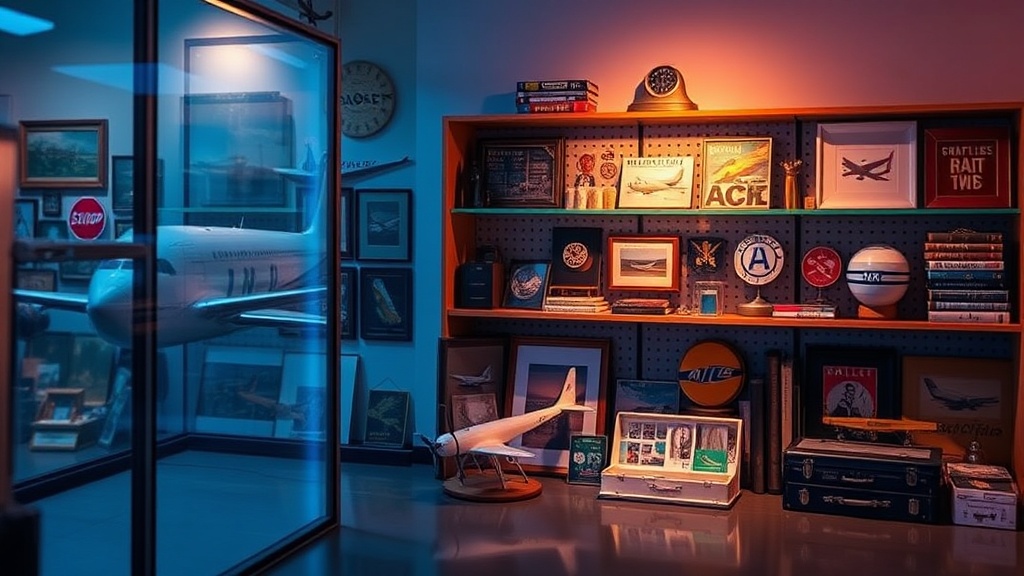
How to Store and Display Your Vintage Airline Memorabilia Collection

Vintage airline memorabilia holds both sentimental and monetary value, making proper storage and display methods a priority for collectors. This guide covers everything from protecting delicate textiles to showcasing metal badges and timetables, helping collectors preserve items while creating visually striking presentations. Whether starting a collection or organizing decades of acquisitions, these practical techniques protect investments and bring pieces to life.
What's the Best Way to Store Vintage Airline Uniforms and Textiles?
Archival storage prevents fading, yellowing, and fabric degradation. The key lies in acid-free materials and controlled environments.
Vintage flight attendant uniforms, pilot caps, and scarves represent some of the most vulnerable pieces in any collection. Natural fibers—wool, silk, cotton—react badly to plastic bins and cedar chests over time. Instead, use Gaylord Archival unbuffered tissue paper for wrapping delicate items and store them in acid-free boxes.
The ideal storage location stays between 65-70°F with 35-55% relative humidity. Basements and attics destroy textiles. A closet in a climate-controlled living space works far better. Here's the thing—many collectors make the mistake of hanging uniforms on wire hangers, which creates shoulder dimples and stress tears. Padded hangers or flat storage in archival boxes prove infinitely kinder to vintage fabrics.
Textile Storage Checklist
- Boxes: Hollinger Metal Edge Textile Boxes or Gaylord Archival Blue/Grey Boxes
- Tissue: Unbuffered acid-free tissue for protein fibers (wool, silk), buffered for plant fibers (cotton, linen)
- Hangers: Only padded, wide-shoulder styles for display—never for long-term storage
- Covers: Unbleached cotton muslin garment bags, never plastic
- Positioning: Lay flat or roll—never fold along existing creases
That said, some pieces deserve display rather than box storage. Rotating displayed items back into archival storage every six months prevents light damage and gives fibers a rest.
How Do You Display Airline Badges and Metal Memorabilia Without Damaging Them?
Metal items require low-humidity environments and careful mounting to prevent tarnishing, pitting, and physical damage from adhesives or tight fittings.
Wings badges, cap insignia, and souvenir spoons tempt collectors toward shadow boxes with sticky backings. Don't do it. The adhesive residue ruins finishes permanently. Instead, use museum-grade mounting techniques—inert materials that cradle pieces without contact damage.
Riker mounts (glass-topped display cases with cotton padding) work beautifully for single badges or small groupings. Available from companies like Thunder Bay Amber, these cases let viewers examine both sides while keeping dust and oils away. For wall displays, ShadowBoxMaker creates custom depths to accommodate three-dimensional objects like airline salt and pepper shakers or model airplanes.
The catch? Metal interacts badly with certain woods. Oak and cedar emit acids that accelerate tarnishing. Display cases should use sealed finishes, inert backings like aluminum composite panels, or acrylic mounting systems. Collectors in humid climates (coastal areas especially) should add silica gel packets—indicating types from Dry-Packs that change color when saturated—and replace them regularly.
| Mounting Method | Best For | Cost Range | Long-term Safety |
|---|---|---|---|
| Riker mounts | Individual badges, small pins | $8-$25 | Excellent |
| Acrylic risers | Three-dimensional objects | $15-$60 | Very Good |
| Magnetic sheets (acid-free) | Flat metal badges, wings | $20-$40 | Good |
| Floating glass frames | Lightweight items, timetables | $30-$100 | Moderate |
| Shadow boxes with pins | Deep objects, mixed displays | $50-$300 | Variable* |
*Variable safety depends on backing materials and mounting methods—avoid adhesives entirely.
How Should You Protect and Show Vintage Airline Timetables and Paper Ephemera?
Paper items need UV-filtering glazing, acid-free backings, and stable framing to prevent the brittleness, foxing, and fading that destroy value.
Vintage timetables, ticket jackets, and promotional brochures printed on low-quality wood-pulp paper deteriorate rapidly without intervention. The lignin in these papers creates acidity that yellows and embrittles fibers. Storing them in standard page protectors accelerates this process—the PVC releases plasticizers that attack inks and paper.
For flat storage, University Products makes archival polyester sleeves (Mylar D) that hold individual timetables without adhesive contact. These go into Hollinger document cases or flat files—the same systems museums use for maps and prints. Worth noting: never stack paper items more than six inches high; the weight compresses lower pieces and creates permanent deformation.
Framed display demands museum standards. Tru Vue Conservation Clear glass or acrylic filters 99% of UV light. Mats must be 100% cotton rag (4-ply minimum) or alpha-cellulose conservation board. The frame package needs to breathe—sealed frames trap moisture and encourage mold. A good framer (look for PPFA—Professional Picture Framers Association—certification) understands these requirements.
Frame Components That Matter
- Glazing: UV-filtering glass or acrylic—never standard picture glass
- Matting: Conservation-grade, 4-ply or thicker, with proper offsets
- Backing: Acid-free foam core or corrugated board, never cardboard
- Hinging: Japanese paper and wheat starch paste—never tape of any kind
- Sealing: Dust cover on reverse, breathable but protective
Creating a Rotating Display System
Smart collectors rotate displayed pieces, keeping the majority in archival storage while showcasing selections seasonally or thematically.
A "gallery wall" approach works beautifully for airline collections—grouping by airline, era, or type. LED track lighting from WAC Lighting or similar manufacturers provides illumination without heat or UV damage. Position lights to avoid direct glare on glass frames.
For three-dimensional objects—those iconic 1960s Braniff flight bags, cocktail shakers, or model aircraft—acrylic vitrines offer protection while maintaining visibility. Companies like Display Gifts and Better Display Cases make sizes specifically for collectibles, with mirrored bases that add presence.
Here's the thing about open shelving: it looks fantastic in Instagram photos but exposes items to dust, light, and handling. If using open display, commit to weekly dusting with microfiber cloths (never feather dusters—they snag and scratch) and consider rotating pieces every two months.
Climate Control on a Budget
Not every collector has museum-grade HVAC systems, but affordable interventions stabilize environments significantly.
A basic digital hygrometer (AcuRite makes reliable models under $15) tracks humidity levels. If readings consistently exceed 60%, a small Eva-dry renewable dehumidifier absorbs moisture without electricity—reactivate it by plugging into a wall outlet when the indicator changes color. For extremely damp spaces, the Pro Breeze Electric Mini Dehumidifier handles spaces up to 250 square feet.
Temperature proves harder to control, but simple rules help: never store collections against exterior walls, keep items away from heat vents and radiators, and maintain air circulation with a small fan. Basements require raised storage—never place boxes directly on concrete floors, which wick moisture.
"The most expensive storage decision is the one that seems cheapest at the time. A $3 plastic bin from the big-box store can destroy a $500 uniform in six months through off-gassing and moisture trapping."
Insurance and Documentation
Proper storage includes protecting against total loss through documentation and appropriate coverage.
Photograph every item individually with a neutral background, scale reference, and detail shots of maker's marks or damage. Store these images in cloud backup (Google Drive, Dropbox) plus a physical hard drive kept offsite. Maintain a spreadsheet recording acquisition date, cost, provenance, and current condition.
Standard homeowner's policies rarely cover collectibles adequately. Companies like Collectibles Insurance Services or Hagerty offer policies specifically for collections, covering risks from fire to accidental damage during display. These policies typically require professional appraisals for high-value items—a cost that pays for itself if disaster strikes.
The catch? Appraisals have expiration dates. Plan on re-appraisal every three to five years, or after significant market shifts. The airline memorabilia market fluctuates with airline mergers (Pan Am items spike when the brand appears in documentaries) and generational collecting trends.
Building a Collection That Lasts
Storage and display decisions made today determine what survives for the next generation of collectors.
Start with the most valuable or fragile pieces, implementing archival methods incrementally as budget allows. A single properly stored vintage TWA flight bag outlasts a dozen pieces crammed into plastic totes. Quality over quantity applies doubly to preservation.
That said, collecting should bring joy, not just anxiety about deterioration. The best displays balance protection with appreciation—items stored so carefully they never see the light of day might as well not exist. Find the rhythm that works: seasonal rotations, themed groupings, or evolving "featured item" spots that keep the collection dynamic while protecting the whole.
Visit the Airline History Museum in Kansas City or similar institutions to see professional-grade storage and display in action. Many offer behind-the-scenes tours showing how curators handle the same challenges home collectors face—just on a larger scale. The principles remain identical: stable environment, archival materials, minimal handling, and documentation that preserves provenance alongside the objects themselves.
Steps
- 1
Choose the Right Storage Environment
- 2
Select Appropriate Display Cases and Materials
- 3
Implement Regular Maintenance and Monitoring