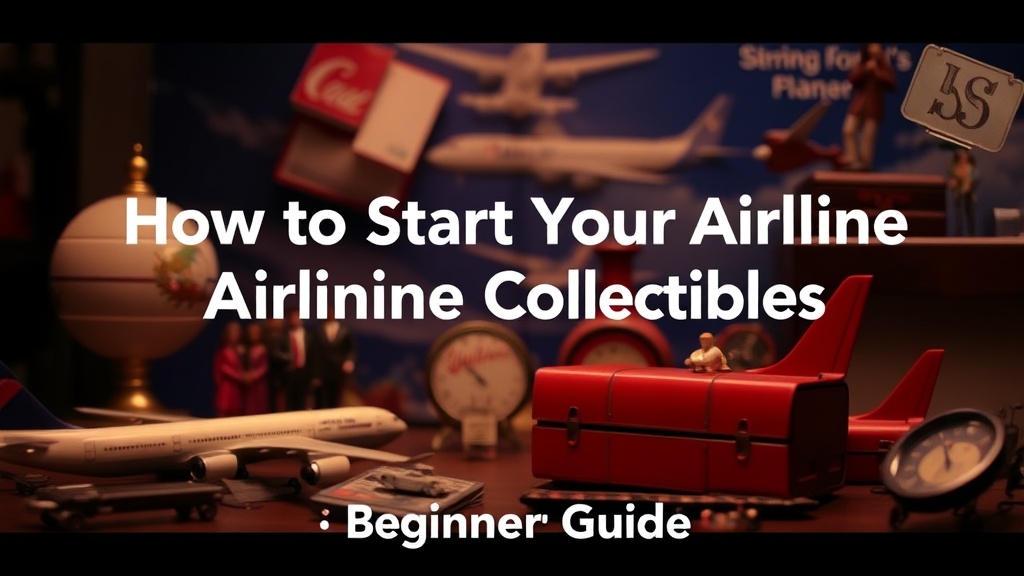
How to Start Your Airline Collectibles Collection: A Beginner's Guide

What this guide covers (and why you should care)
This guide walks through the practical steps to start an airline collectibles collection—from choosing a niche to sourcing rare finds and preserving their value. Airline memorabilia represents more than aviation history. These items capture design trends, cultural moments, and the golden age of travel. Whether you're drawn to vintage Pan Am flight bags or limited-edition British Airways tail pins, starting a collection requires strategy, patience, and an eye for authenticity.
What airline collectibles should beginners focus on first?
Beginners should start with affordable, widely available items before moving into high-value rarities. The best approach involves picking one category and learning it thoroughly rather than scattering attention across everything.
The most accessible entry points include:
- Wings pins and badges—airlines issue these to commemorate routes, anniversaries, or events. They're small, affordable, and easy to store.
- Playing cards—airlines printed custom decks from the 1930s through the 1980s. Complete decks with original boxes fetch modest prices but hold steady value.
- Postcards and photographs—vintage airline promotional cards and original aircraft photos cost little and document fleet evolution beautifully.
- Luggage tags—leather and paper tags from defunct carriers like TWA or Eastern Airlines connect collectors to aviation's past without breaking the bank.
Here's the thing: trying to collect everything at once dilutes focus and budget. Pick one category. Study it. Learn the hallmarks of authenticity—the font used on 1960s BOAC tags, the weight of vintage aluminum wings, the paper stock of 1970s postcards. Depth beats breadth when building knowledge (and avoiding fakes).
Where can you find authentic airline collectibles?
Authentic airline collectibles surface through specialized dealers, online marketplaces, estate sales, and aviation museums with gift shops. Each source carries different risks and rewards.
Established dealers and auction houses like Bonhams and Heritage Auctions regularly feature aviation memorabilia. Bonhams holds dedicated air and space sales several times yearly, offering everything from vintage airline posters to flight crew uniforms. The premiums run higher, but authenticity guarantees protect buyers.
eBay and Etsy remain viable hunting grounds—if you know what to look for. Search for specific items ("Air Canada 1970s wings pin" not "old airline badge"). Check seller ratings, request additional photos, and compare items against documented examples from collector forums.
Aviation museums and air shows often sell donated duplicates or reproduction items. The Smithsonian National Air and Space Museum store carries authenticated replicas alongside original pieces. Smaller regional museums—like the Heritage Flight Museum in Burlington, Washington—occasionally deaccession items to fund acquisitions.
Worth noting: airline employee sales and estate liquidations occasionally surface genuine crew uniforms, logbooks, and internal memorabilia. These items rarely reach public markets. Joining collector societies (the Airline History Museum membership includes access to trading networks) opens doors to these private sales.
How much should you expect to spend on airline collectibles?
Starting a collection costs as little as $50 or stretches into thousands depending on category and condition. Setting a realistic budget prevents impulse purchases that don't fit the collection's direction.
| Category | Entry-Level Price | Mid-Range Investment | Premium/Rare Items |
|---|---|---|---|
| Wings pins | $5–$25 | $50–$150 | $300+ (early Pan Am, enamel) |
| Vintage flight bags | $30–$80 | $100–$300 | $500+ (unused with tags) |
| Playing cards | $10–$40 | $75–$200 | $400+ (complete decks, major airlines) |
| Posters | $50–$150 | $300–$800 | $2,000+ (original lithographs) |
| Uniform pieces | $40–$120 | $200–$600 | $1,500+ (complete vintage sets) |
The catch? Condition dramatically affects value. A 1960s Qantas flight bag with original tags commands triple the price of an identical bag showing wear. That said, worn items tell stories—and cost less. Beginning collectors shouldn't chase mint condition obsessively. Learn first. Upgrade later.
How do you verify authenticity and avoid reproductions?
Verifying authenticity requires examining materials, construction methods, and provenance documentation. The airline collectibles market includes convincing reproductions—some accidental, some deliberate.
Start with the physical evidence. Vintage wings pins from major carriers like Delta, United, or KLM used specific clasp types. Pre-1970s pins typically featured simple C-clasps or safety-pin mechanisms, not modern butterfly clasps. Enamel work on genuine vintage pieces shows slight irregularities; machine-perfect coloring suggests reproduction.
Paper items demand scrutiny of printing methods. Offset lithography dominated commercial printing from the 1950s onward. Earlier items used letterpress or screen printing. Under magnification, dot patterns differ between vintage and modern reproductions. PSA Card Authentication services now grade and authenticate vintage airline playing cards and photographs, providing third-party verification worth the investment for significant purchases.
Provenance matters. Original receipts, employee ID cards accompanying uniforms, or photographs showing items in historical context add value and authenticity confidence. A Northwest Airlines stewardess uniform without documentation remains collectible; the same uniform with the original owner's employment photos and wings becomes historically significant.
When in doubt, consult specialist communities. The Airline Historical Society maintains forums where experienced collectors review questionable items. Post clear photos—front, back, close-ups of maker's marks—and wait for consensus before purchasing.
What's the best way to store and display airline collectibles?
Proper storage prevents deterioration that destroys both monetary and historical value. Different materials demand different conditions—what preserves paper damages leather, and vice versa.
Paper items (postcards, tickets, brochures) need archival polyester sleeves and acid-free storage boxes. Keep them flat, away from direct sunlight, in stable humidity (around 50%). The Society of American Archivists recommends storing paper collections in spaces with minimal temperature fluctuation—attics and basements typically fail this test.
Textiles (uniforms, flight bags) require breathable storage. Acid-free tissue paper supports folds; cedar-lined chests repel pests. Never store vintage uniforms in plastic garment bags long-term—they trap moisture and encourage mildew. Display uniforms on padded mannequins rather than wire hangers to prevent shoulder damage.
Metal items (wings pins, badges, silverware) tarnish. Store them in closed cases with silica gel packets, or display them behind UV-protective glass. Handle with cotton gloves—skin oils accelerate corrosion.
That said, collectibles deserve to be seen, not hidden. Shadow boxes work beautifully for wings collections. Framed posters transform rooms. The key? Balance display with preservation. Rotate displayed items periodically. UV-filtering window film costs little and protects everything in sunlit rooms.
How do you connect with other airline collectibles enthusiasts?
Building relationships with fellow collectors accelerates learning and opens trading opportunities. The airline memorabilia community—though specialized—welcomes newcomers who show genuine interest and respect for the hobby's history.
Online forums like Airliners.net host active collecting discussions alongside aviation photography. The site's memorabilia section sees daily posts about recent acquisitions, identification requests, and valuation advice. Facebook groups including "Vintage Airline Collectibles" and "Airline Memorabilia Buy-Sell-Trade" operate with varying quality—vet sellers carefully, but genuine community exists there.
In-person connections matter more. The annual World Airline Historical Society convention brings collectors, former airline employees, and dealers together for trading, seminars, and networking. Regional airline history conferences happen throughout North America and Europe. These events reveal items that never reach online listings—retired pilots clearing attics, flight attendants selling decades of accumulated pins and photographs.
Worth noting: many collectors are former airline employees with deep institutional knowledge. They remember which uniforms changed in 1974, why certain wings pins were discontinued, which routes warranted commemorative items. This oral history doesn't exist in books. Relationships unlock it.
Start small. Attend one show. Join one forum. Introduce yourself and mention your collecting focus. The community recognizes genuine enthusiasm—and reciprocates it.
"The best collections aren't built fastest. They're built with patience, research, and relationships that outlast any single acquisition." — Margot Scott, airlinemerch.blog
Steps
- 1
Research and Identify Authentic Pieces
- 2
Source from Reputable Dealers and Auctions
- 3
Store and Display with Archival Materials